

What good supervision actually feels like — and how to spot when something is off
A practical guide for provisional psychologists on the green flags, red flags, and grey areas of the supervisory relationship.
Most provisional psychologists have had one, maybe two supervisors by the time they start to form an opinion about what supervision should feel like.
That is not a lot of data.
When your only reference point is the supervisor you have, it is genuinely hard to know whether what you are experiencing is normal, good, concerning, or somewhere in between. Supervision is one of the most important professional relationships you will have during your internship — it directly shapes your clinical development, your professional identity, and your sense of whether you are actually cut out for this work. Getting it wrong has consequences that go beyond awkward sessions.
This post is not about compliance. It is not about whether your supervisor is ticking the right AHPRA boxes. It is about what the relationship should actually feel like when it is working, and what patterns to pay attention to when something feels off.
Jump to a section:
- What supervision is supposed to do
- Green flags — what healthy supervision looks like
- Red flags — patterns worth taking seriously
- The grey zone — things that are complicated but not automatically wrong
- What to do if something feels off
- A note on the power imbalance
What supervision is supposed to do
Before getting into flags of any colour, it helps to be clear about what supervision is actually for.

Supervision in the context of the 5+1 internship pathway has three broad functions. It supports your clinical development by giving you a space to think through complex cases, build skills, and develop your professional identity. It provides oversight of the work you are doing with clients, which is a protective function for the people in your care. And it serves a gate-keeping function for the profession — your supervisor's final assessment of your competence is what ultimately supports your application for general registration.
Those three functions exist in real tension with each other. A space designed for honest reflection about what you find hard can feel very different when you know the same person is also evaluating whether you are ready to practise independently. A good supervisor holds that tension well. A poor one collapses it in a direction that serves neither you nor your clients.
The updated PsyBA competencies that came into effect in December 2025 explicitly include supervision as part of professional practice — both as something provisionals should be actively engaging with and as something supervisors are accountable for delivering well. Supervision is no longer just a logistical requirement. It is a professional relationship with ethical obligations on both sides.
Green flags — what healthy supervision looks like

You can bring your worst sessions without bracing for it
The most reliable indicator of a healthy supervisory relationship is that you can walk in and say "that session was a mess and I am not sure what I did wrong" without anticipating humiliation, dismissal, or a shift in how your supervisor sees you.
Good supervisors know that honest disclosure of difficulty is not evidence of incompetence — it is evidence of developing competence. The clinician who can identify when something went wrong and think clearly about why is further along than the one who presents every session as fine.
If you find yourself editing what you bring to supervision, minimising difficulties, or rehearsing how to present cases so they sound better than they were, that is worth noticing. It might be about your own anxiety, but it might also be about what your supervisor has implicitly communicated is welcome.
Feedback is specific, direct, and not delivered as a verdict
Good feedback in supervision is specific enough to be actionable. It names what happened, explains why it matters clinically, and points toward what to do differently. "You seemed to move into problem-solving mode before the client had finished expressing what they needed" is useful. "You need to work on your therapeutic presence" is not.
Feedback should also be proportionate. Significant concerns about your practice need to be raised clearly and early, not saved up for a final assessment. If serious issues about your competence are being communicated for the first time in writing near the end of your internship, that is a supervisory failure regardless of the content of the concerns.
You leave supervision thinking about your clients differently
This is a simple but reliable test. Good supervision changes something. You arrive with a case you are stuck on and you leave with a different angle, a new conceptualisation, a clinical question you had not thought to ask. That shift does not have to be dramatic. It can be subtle. But it should be there.
If supervision consistently leaves you feeling either unchanged or worse, that is information.
Your supervisor knows what they do not know
Supervisors who practise in a limited scope and are honest about it are better supervisors than those who claim breadth they do not have. A supervisor who says "that is outside my area — let me connect you with someone who can consult on this" is modelling exactly the kind of practice you should be learning.
Be cautious of supervisors who never express uncertainty, never refer a question on, and position themselves as the authority on everything.
Your development is tracked and discussed explicitly
Across your internship, the conversation about your development should evolve. Early sessions will naturally focus on orientation and building confidence. As you progress, the clinical complexity should increase, your autonomy should expand, and supervision should become more of a collaborative dialogue and less of an instruction session.
A good supervisor tracks where you started and where you are now. They name growth explicitly, not just difficulties. They have a clear sense of where you need to develop and are working with you to get there — not just noting the gap.
Red flags — patterns worth taking seriously
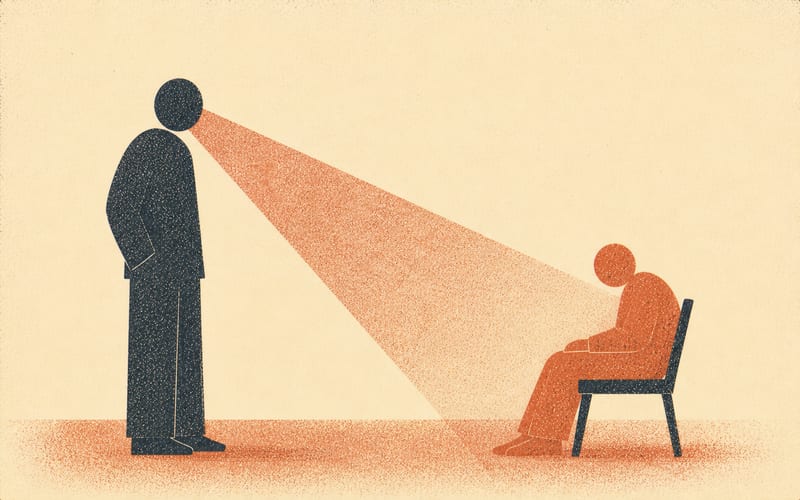
Supervision is consistently cancelled, shortened, or deprioritised
The Board requires a minimum of one hour of supervision for approximately every 18 hours of practice, with a recommendation that supervision occur weekly. That is a floor, not a ceiling.
A supervisor who regularly cancels sessions, cuts them short, or is consistently distracted and unavailable is not meeting their professional obligations. More than that, they are leaving you without the oversight that your clients' care depends on.
Occasional rescheduling is normal. A pattern of deprioritisation is not.
You feel managed rather than developed
There is a difference between supervision that is oriented toward your growth and supervision that is oriented toward managing risk to the supervisor or the organisation. The latter tends to involve a lot of documentation focus, procedural instruction, and CYA conversations — and very little space for genuine clinical reflection or honest discussion of difficulty.
If your supervisor seems more concerned with what you are writing in your notes than with what is actually happening in your sessions with clients, that imbalance is worth naming.
Dual roles are not acknowledged or managed
Supervisors may find themselves serving dual or competing roles — for example, being both a board-approved supervisor and a line manager of the same person. This is not automatically a problem, but it requires active and explicit management.
If your supervisor is also your employer, your colleague, or someone with a financial stake in your work, those competing interests need to be on the table. A supervisor who never acknowledges the complexity of their dual role is either unaware of it — which is concerning — or is managing it in a way that serves their interests rather than yours.
Feedback is personal rather than clinical
There is a difference between feedback about your clinical work and feedback about you as a person. Good supervision stays with the former. When feedback consistently targets your character, your personality, your emotional responses, or your personal history in ways that are not clearly tied to clinical outcomes, that is a boundary that is being crossed.
This does not mean your personal responses to clients are off limits — countertransference and self-awareness are legitimate clinical material. But there is a difference between "I notice you seem to disengage when clients express anger — can we think about what that's about clinically?" and consistent commentary that functions more like personal criticism than professional development.
Significant concerns appear for the first time near assessment
If you arrive at your final competency assessment and your supervisor raises substantial concerns about your practice that were never flagged during the internship, something has gone wrong in the supervision process regardless of whether the concerns themselves are valid.
The ethical guidelines for supervision are explicit that supervisors have obligations around informed consent and competence. That includes being transparent with supervisees about concerns regarding their development in time for those concerns to be addressed. A final assessment that introduces new and serious issues is not a fair process.
You are being asked to do things that feel ethically uncomfortable
This one requires careful navigation because discomfort in supervision is not always a sign that something is wrong — sometimes it reflects legitimate challenges to your practice. But if your supervisor is consistently asking you to do things that feel ethically questionable, those feelings deserve serious attention.
This might include pressure to see more clients than you feel clinically safe seeing, requests to document things in ways that do not accurately reflect what happened, being asked to operate outside your scope without adequate support, or feeling that client welfare is being subordinated to organisational or financial interests.
Trust the discomfort enough to at least get a second opinion.
Your supervisor's personal distress or difficulties are regularly brought into supervision
Supervisors are human beings with their own challenges. Occasional moments of personal disclosure can be appropriate and humanising. A pattern of supervision sessions that are substantially occupied with the supervisor's own difficulties — personal, professional, or both — is a role reversal that should not be happening.
Your supervision time is yours. It exists for your development and your clients' welfare. It is not a space for your supervisor to process their own material.
The grey zone — things that are complicated but not automatically wrong

Directiveness
Some supervisors are more directive than others. Early in an internship, a more directive style often makes sense — you are learning the basics and need clear guidance. As you develop, a good supervisor should naturally move toward a more collaborative style. A supervisor who remains highly directive throughout your entire internship, regardless of your growing competence, is not supporting your development toward independent practice.
That said, directiveness is not inherently a red flag. Context matters. A complex risk situation, a novel clinical presentation, or a setting with specific protocols are all legitimate contexts for a more directive approach.
Different theoretical orientation
Supervision across different theoretical orientations can be genuinely valuable. Being supervised by someone whose approach differs from yours forces you to think about what you are doing and why, which is good for clinical development.
The problem arises when a supervisor insists that their orientation is the only valid one, dismisses evidence-based approaches that fall outside their own framework, or evaluates your competence based primarily on how well you apply their model rather than on the quality of your clinical work. Theoretical diversity in supervision is an asset. Theoretical rigidity is not.
Supervisor friendliness
A supervisor who is warm, personable, and easy to talk to is a good thing. The supervisory relationship works better when there is genuine rapport.
The complication arises when friendliness starts to obscure the evaluative function of supervision. If your supervisor is so focused on maintaining a positive relationship that they avoid giving you honest difficult feedback, that is not serving your development. Being liked by your supervisor is not the same as being well supervised.
What to do if something feels off
The power imbalance in supervision makes this genuinely difficult. Your supervisor holds significant influence over your pathway to general registration. Raising concerns requires courage, and the fear of consequences is understandable and real.
A few options worth knowing about:
Bring it to a peer group first. If you have access to peer supervision or group supervision with other provisionals, this is a useful place to reality-check your experience. Hearing that others have similar experiences — or very different ones — is valuable information.
Seek a secondary supervisor. Having a second supervisor is both permitted and encouraged under the current guidelines. A secondary supervisor can provide a different perspective on your development, give you a comparison point for what supervision can look like, and in some cases provide a more appropriate space for concerns that feel too difficult to raise with your primary supervisor.
Contact your professional body or AHPRA. If you have serious concerns about your supervisor's conduct — particularly if it involves ethical violations, exploitation, or behaviour that is affecting your clients — the APS and AHPRA both have processes for addressing these. You do not have to resolve it alone.
Document your concerns. If you are concerned about what is happening in supervision, keep a contemporaneous record. Note what was said, when, and how you responded. If a situation escalates, having a clear record of the pattern is important.
A note on the power imbalance

It would be incomplete to write about supervision without acknowledging how much the power differential shapes everything in this relationship.
Your supervisor controls a significant part of your professional future. They submit the competency assessment that supports your application for general registration. In many settings they also control your caseload, your access to development opportunities, and your reputation within a clinic or organisation.
That reality does not mean supervisors are adversaries — the vast majority are not. But it does mean that the burden of managing the relationship ethically rests more heavily on the supervisor than on you. A good supervisor understands this and actively works to create conditions where you can be honest without fearing consequences. A poor one uses the power imbalance, consciously or not, in ways that serve their interests rather than yours.
You are not in this relationship as equals. That is not a failure of the system — it is inherent to the supervisory function. What matters is whether your supervisor is using that power differential responsibly.
If they are not, you deserve to know that what you are experiencing is not normal, and that you have options.
PsychVault is a marketplace for psychology and allied health resources built by Australian clinicians. Browse supervision documentation resources, reflective practice tools, and logbook templates at psychvault.com.au/resources.
Discussion
Share your thoughts and experiences with this resource.
Sign in to leave a comment
Comments
Browse real clinician-designed resources
Move from strategy into implementation with templates, handouts, and psychoeducation tools already live on the marketplace.
Turn your own resources into a polished store
Publish clinician-grade templates, build trust signals, and start growing an evergreen library under your own brand.
Keep the topic cluster growing

The NPE is not an academic exam. Here is what the Psychology Board actually wants from you, how the 150-question exam is structured, and what a solid study approach looks like.

A practical guide to the Australian Psychology Board internship pathway. Understand the 5+1 requirements, logbooks, supervision hours, competencies, and how to survive without burnout.

What happens to your progress if admin issues push you out of a clinical masters in semester one, and why the answer might surprise you.